The 27-Year Blind Spot: What a 2015 VP’s Nightmare Taught Me About Surviving the AI "Mythos" Era

May 29, 2026
- My phone rings........
"Hello, Shim speaking..."
"Hi Shim, this is Chris.
"I am looking for an Engineering Leader for a high-stakes client in the telecommunications industry here in New York..."
A few minutes on that call turned into a few weeks, and a month later....... calling New York my new home, I walked into my new job. It was a massive transformation. Everyone was counting on me to drive that change. To be honest, people even forgot the name of my organization—all I kept hearing was my name echoing in the halls.
On Day 3,
I walked into the office of my hiring manager, the VP of the Mobile Computing Division. During our exchange, he looked at me and simply shared:
"Shim, you know what keeps me up at night? Those latency bugs that keep showing up right before every single release."
I acted like I didn't know much, but I asked a simple, universal question: "Why are we waiting until the last minute to find them?"
I knew at the time that the entire department had been trying to claw its way out of deeply rooted Waterfall processes for over a few years. My mandate was to scale them in Agile globally and modernize the legacy SDLC and developer’s platform. But I was still curious. I was hungry. I wanted to dig more.
During my visits to our sites across the continents, what I discovered was a universal truth: Developers were under immense pressure to build new features and hit MVPs for the new OS platform. The situation forced them to only touch the critical bugs that would take them to the finish line, leaving the rest for "later."
That "later" hardly ever came.
The technical debt was monumental. I heard the terms “ATL” and “BTL” in a war room led by program managers during a "Bug Scrub" session before the release.
As a food lover, I thought BTL meant, make your own Bacon, Tomato, and Lettuce sandwich.
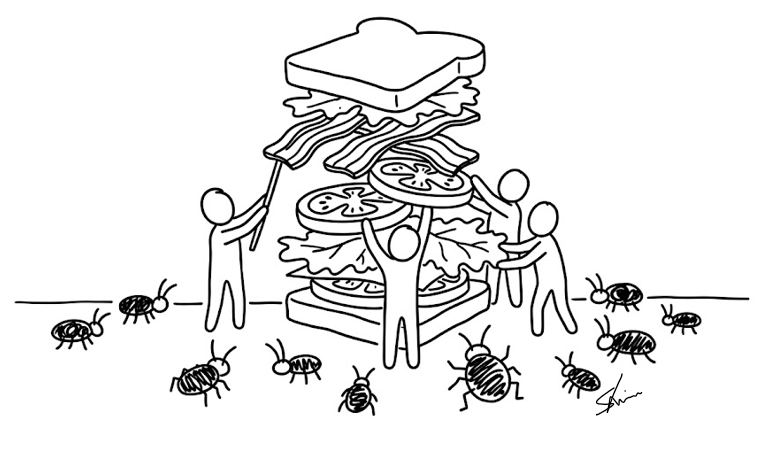
I was darn wrong.
Now I know why people informed me that throughout development, as bugs kept popping up, they drew a line in Excel: Above The Line (ATL) and Below the Line (BTL). We only fix the ATL bugs.
My response, jokingly: “Well, we are still shipping bugs to the customer, knowingly.”
In week 1.5....
I know why my GM gave me those 30 minutes on the 3rd floor over his lunch and stated, “Shim, I kept hearing the entire department has gone agile, but I am not seeing any action on the floor.”
Me, sitting in front of an executive leader, responded in a few simple words: “That is because we went pen and paper,” referring to the classroom agile learning sessions.
The rest is history that I am keeping for my upcoming book, "The Unplugged Leadership".
Anyways, the change was desperately needed. We had to balance the drop-in requests with allocated commitments. I had to change the mid-layer leadership's mindset and announce to our customers exactly how we would operate from now on—making them feel like we would engage them more frequently and transparently.
What I introduced was giving "Equal Opportunity" to new feature development and bug fixes. They had to go hand in hand. Systematically, if your code had a bug while developing, it must not go to production. If bugs showed up during system integrations, the team must assess and commit. Give priority. Set urgency. Own the quality and security together as a whole.
“Make the old way impossible, and the new way inevitable.”
We saw significant results in the short term; our SW quality score going up, up, and up.
Over the years since,
I’ve been in strategic partnerships with my CISO. I learned a lot from him and his security leaders, and we continuously drove crucial security initiatives together that we celebrated.
What we found early on was shocking to me. Especially in our legacy code, from plain text passwords, API keys, secrets left in the open to poor hygiene practices. We cleaned it up across tools, projects, repos, and wikis. Automation, manual effort, whatever it took—100% sanitization in some areas, one after another. Automated SBOMs, EU CRA readiness, keep moving.
For years, we relentlessly tightened the software supply chain by automating the SDLC. Developers got frictionless compliance, and the CISO got policy control. Less context switching, reduced developer cognitive load. And that was not the end, this is always going to be an ongoing journey that outlasts me what I started.
Lately, I’ve been busy with my own "AI Tourism," researching, learning, testing, building, breaking, enhancing, and embracing whatever is humanly possible with my tiny curious mind.
I’m obsessed with understanding the nature of AI, not to become an AI Engineer myself, but to understand the landscape and the horizon. I was the first person in my home getting excited about Closed vs. Open AI models beside my dog, Rex. I wasn't just dancing because open sourced models are popping up; I was super happy because it will push real innovations in the industry.
But over the last few months, something has been crossing my mind. As a curious mind, I started to wonder: What! WOW! and Now What!
The introduction of Anthropic's Mythos Preview digging into Project Glasswing intel... that short video I watched...
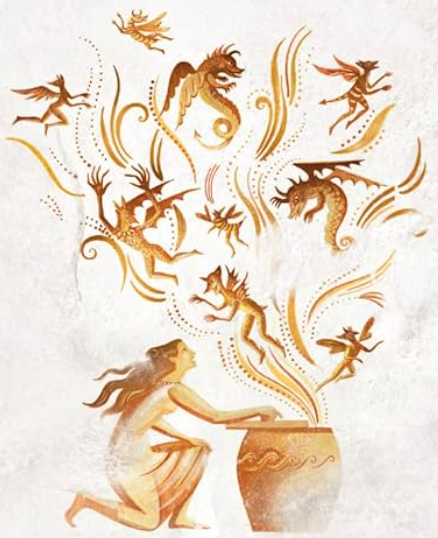
Image credit: Stephen Fry's Mythos
It took me right back to that VP’s room in 2015.
It took me back to the deep conversations with my CISO about bugs and security. I have been speaking with my long-term strategic external partners who are industry leaders through weekly, bi-weekly, or monthly scheduled calls. Looking through their product roadmaps and the AI in their products. Sometimes valuable, sometimes I call their bluff! I could tell we are all trying to figure things out; no one had that kryptonite in their hand. I used to call it "AI Distractions".
But Mythos is no bluff.
During the preview, it was revealed that this AI model autonomously uncovered a critical vulnerability hiding from human eyes in OpenBSD for 27 years. I am not even going into the beloved “Linux” and what has been discovered there.
Just like others, this shocked me.
As humans, we have tried so many things to keep our code clean. We did take care of our “ATL” or the “BTL Sandwiches”. Everyone knows Mythos-tier capabilities can't fall into the wrong hands.
But what I have been thinking deeply about is HOW enterprises are getting ready to embrace AI models as powerful as this.
Securing a company's IP standing beside your CISO is the best feeling in the world. But to survive this new era, here is what I think we as an industry should look into as a starting point:
1. Shift from Bug Hunting to Automated Remediation
We can no longer rely on human eyes to find vulnerabilities, nor can we rely solely on human hands to fix them. The bottleneck is no longer discovery; it is capacity. Engineering teams must build automated remediation pipelines where defensive AI flags the zero-day and generates the remediating pull request for human review.
2. Destroy "Safe by Obscurity"
The grace period of legacy code is over. If you have deep technical debt, an offensive AI agent will find it. Organizations must implement absolute zero-trust and application-layer micro-segmentation. If an intrusion occurs, the blast radius must hit a cryptographic wall immediately.
3. Empathy on the Engineering Floor
We cannot punish developers for 27-year-old bugs. The pressure to "ship the MVP" created this debt.
Leadership must provide the time, the tooling, and the "Equal Opportunity" framework to let developers sanitize architecture without fearing they will miss a feature deadline.
How are you and your CISO shifting your security architecture to prepare for autonomous AI capabilities? I’d love to hear how your teams are tackling this on the ground.
The Mythos era isn't just about fighting AI with AI.
It is about having the courage to look at the systems we built and giving our engineering teams the mandate to heal them.
Full Disclosure: I did not use Mythos to write this article or surrender my authentic storytelling capabilities. "This is not a Line. This is the Truth"- Shim.